
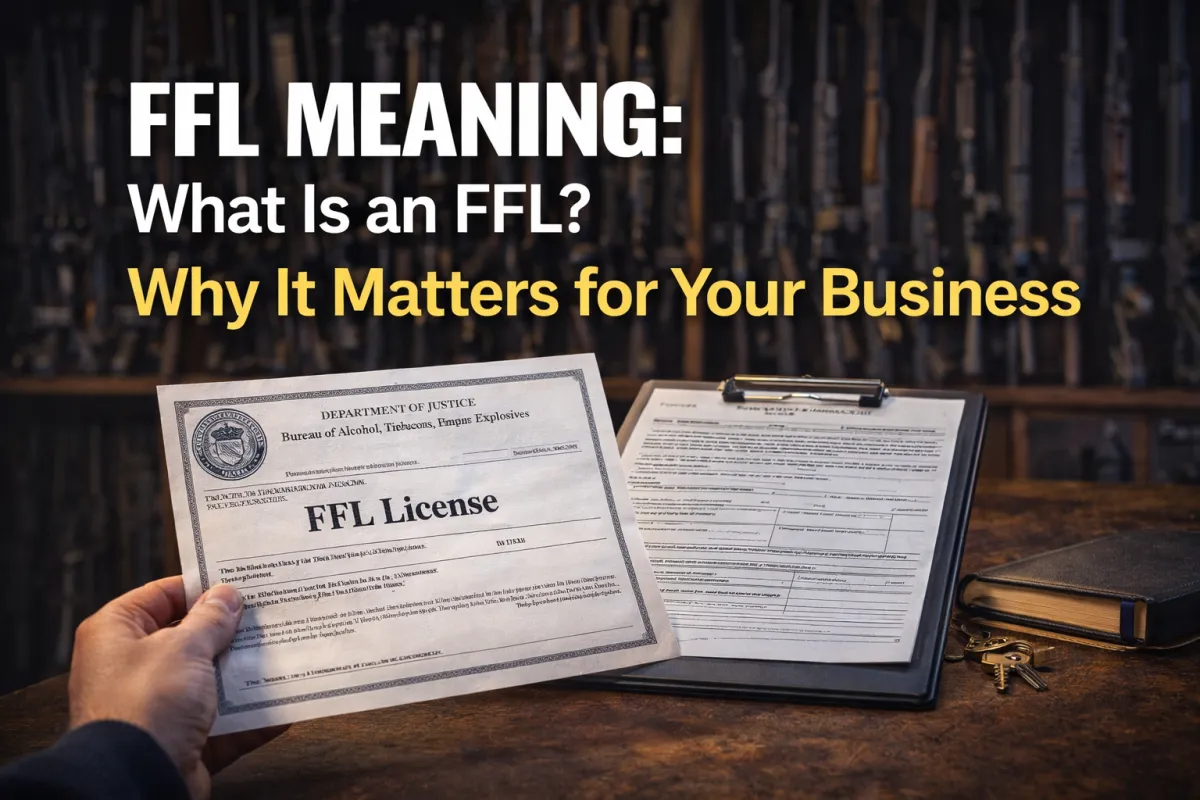
FFL Meaning: What Is an FFL and Why Does It Matter for Your Business?
FFL Meaning: What Is an FFL and Why Does It Matter for Your Business?
If you've spent any time around the firearms industry, you've heard the term FFL thrown around constantly.
FFL dealer. FFL transfer. FFL license. Get your FFL. Find an FFL near me.
But what does FFL actually mean, how does it work, and more importantly, why should you care?
This post answers all of it.
What Does FFL Stand For?
FFL stands for Federal Firearms License.
It's a license issued by the Bureau of Alcohol, Tobacco, Firearms and Explosives (ATF) that authorizes individuals and businesses to legally engage in the manufacture, importation, or sale of firearms in the United States.
In plain terms: if you want to sell guns commercially, manufacture firearms, or receive firearms shipments on behalf of buyers, you need an FFL.
What Is an FFL License?
A Federal Firearms License is the legal foundation of the commercial firearms industry in the US.
Without one, you cannot legally engage in the business of dealing, importing, or manufacturing firearms. You can own firearms as a private citizen, but the moment you start selling them regularly for profit, federal law requires you to be licensed.
The FFL system exists to create accountability in the firearms supply chain. Every licensed dealer maintains a bound book, a running record of every firearm that comes into and goes out of their inventory. Every sale requires a background check through the FBI's NICS system. Every transaction leaves a paper trail.
That accountability is what the license requires, and it's what separates commercial firearms dealing from private sales.
The Different Types of FFL Licenses
Not all FFLs are the same. The ATF issues nine types, each covering different activities:
FFL Type What It Authorizes Type 01 Dealer in firearms (most common) Type 02 Pawnbroker dealing in firearms Type 03 Collector of curios and relics Type 06 Manufacturer of ammunition Type 07 Manufacturer of firearms Type 08 Importer of firearms Type 09 Dealer in destructive devices Type 10 Manufacturer of destructive devices Type 11 Importer of destructive devices
The vast majority of gun shops, home-based dealers, and online firearms businesses operate under a Type 01 license. If you want to sell firearms as a business, that's almost certainly the one you need.
A Type 03 is for collectors who want to acquire curio and relic firearms (older, collectible guns) more easily and at lower transfer costs. It's not a dealer license and doesn't allow commercial sales.
What Is an FFL Dealer?
An FFL dealer is any person or business holding a Type 01 Federal Firearms License, meaning they're legally authorized to buy and sell firearms commercially.
FFL dealers are the retail layer of the firearms industry. They buy from distributors and manufacturers at wholesale prices, sell to end consumers, and handle all the compliance requirements that come with it: 4473 paperwork, NICS background checks, bound book maintenance, and ATF inspections.
FFL dealers range from major chains like Cabela's and Bass Pro Shops all the way down to solo operators running home-based dealerships out of a spare room. The license is the same. The business model is not.
What Is an FFL Transfer?
An FFL transfer is the process of legally transferring ownership of a firearm through a licensed dealer.
The most common scenario is an online gun purchase. When you buy a firearm from an online retailer, federal law prohibits the gun from shipping directly to you. It has to ship to a licensed FFL dealer near you, who then verifies your identity, runs a background check, completes the required paperwork, and transfers the firearm to you.
The fee the dealer charges for this service is called the FFL transfer fee. It typically runs between $25 and $50 depending on the dealer and the market.
FFL transfers also happen in private party sales in many states, where both parties go through a dealer to ensure the background check and paperwork are handled properly.
Why Would Someone Want to Get Their FFL?
There are several legitimate reasons people pursue an FFL beyond just opening a traditional gun shop.
Wholesale access. Licensed dealers can buy directly from distributors at wholesale prices. For someone who shoots frequently or wants to build an inventory, the savings are significant.
Home-based business. Thousands of FFL holders operate legitimate firearms businesses from their homes. Low overhead, flexible hours, and genuine income potential from transfers, consignment, and private sales.
Online sales. An FFL opens the door to selling firearms online through platforms like GunBroker, expanding your market far beyond your local area.
Starting a gun shop. The FFL is the foundational license for any brick-and-mortar gun store. You can't open without one.
Gunsmithing. While a gunsmith license isn't technically required at the federal level, most gunsmiths get an FFL to legally handle customer firearms for repair and modification.
The license itself is inexpensive. A Type 01 FFL costs $200 for the first three years and $90 to renew every three years after that. The real investment is in building the business around it.
What Are the Requirements to Get an FFL?
The baseline federal requirements are straightforward:
You must be at least 21 years old to deal in handguns. You cannot be a prohibited person under federal law. You must have a valid business premises, which can be a commercial location or your home depending on local zoning. And you must have genuine commercial intent. The ATF does not issue licenses for personal use.
The bigger hurdles are often at the state and local level. Some states require additional dealer licenses. Some municipalities restrict or prohibit commercial firearms activity in residential zones. Before you apply, those are the things worth researching first.
FFL vs. No FFL: What's the Difference in Practice?
A lot of people ask whether they really need an FFL to sell guns. The short answer is yes, if you're doing it as a business.
Private citizens can sell firearms from their personal collection without an FFL, but the line between personal sales and being "engaged in the business" is something the ATF takes seriously. If you're buying guns with the intent to sell them for profit on a regular basis, you're in dealer territory and the license is required.
The FFL isn't just a legal requirement either. It's a business asset. It gives you access to the wholesale market, the ability to accept transfers, and the credibility that comes with being a licensed professional in the industry.
The Business Side of FFL That Most People Overlook
Getting your FFL is the easy part.
The harder part is building a business that generates consistent leads and revenue once you have it. Most new dealers underestimate how invisible they are when they first open. No website. No local search presence. No system for capturing customer information or following up.
The dealers who build real businesses treat their FFL as the starting line, not the finish line. They invest in a website that ranks in local search. They build a CRM to follow up with every customer. They create systems around transfers that turn one-time transactions into long-term relationships.
That's the gap FFL Funnels exists to close.
Thinking About Getting Your FFL or Just Getting Started?
The best thing you can do right now is get around other dealers who are figuring it out in real time.
Our free Facebook community is where FFL dealers, from home-based operations to brick-and-mortar shops, share what's working, ask questions, and help each other grow.
No pitch. No gatekeeping. Just real conversations about building a real business.
Join the FFL Funnels Community on Facebook
FFL Funnels helps independent firearms dealers build websites, marketing systems, and automation that generate consistent inbound leads. If you're already licensed and ready to grow, book a free discovery call.


